The 17th meeting of the Conference of the Parties (COP 17) to the Convention on Biological Diversity (CBD) took place in October 2026 in Yerevan, Armenia. COP 17 marked the first global review of collective progress towards the implementation of the Kunming-Montreal Global Biodiversity Framework (KMGBF).
ESA organized a WEED side event in the “Data to Action” Pavilion on Sunday 25 October titled "Earth Observation for GBF Headline Indicator A.2: Enabling Countries to Monitor and Report on the Extent of Natural Ecosystems”. The Kunming–Montreal Global Biodiversity Framework requires countries to monitor changes in natural ecosystems, notably through Headline Indicator A.2 on the Extent of Natural Ecosystems. However, many Parties face technical and capacity challenges in producing consistent ecosystem maps and reporting against the GBF monitoring framework. According to the CBD's 2026 State of Biodiversity Action Report, only 50% of reporting Parties included data on Headline Indicator A.2 in their submissions, with only 10% disaggregating the indicator in different ecosystem types (EFG’s) and only a few Parties submitted a time series to contribute to tracking progress towards CBD KM-GBF Goal A (Protecting, restoring, and enhancing ecosystem integrity and connectivity, halting species extinction, and maintaining genetic diversity). Meanwhile, new support mechanisms have emerged, such as the European Space Agency-funded World Ecosystem Extent Dynamics (WEED) toolbox, which was deployed to help countries map out and report baseline data for Indicator A.2.
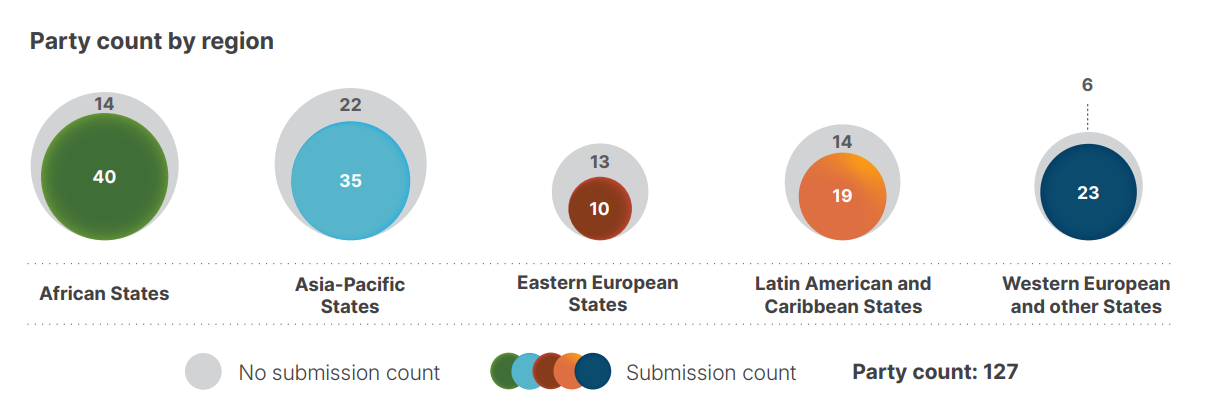
Image from https://www.cbd.int/global-report/global-report-2026-full.pdf
The side event presented the World Ecosystem Extent Dynamics (WEED) project, funded by ESA, led by VITO with partners from BC3, iDiv and IIASA, and implemented in collaboration with EEA, UNSD and GEO. WEED provides an open-source, cloud-based toolbox for mapping and monitoring terrestrial, freshwater, and coastal ecosystems, aligned with the IUCN Global Ecosystem Typology and supporting GBF Headline Indicator A.2 and SEEA Ecosystem Accounting. The solution has been co-developed with national authorities in Norway, Czechia, Greece, Colombia, South Africa, and Vietnam, and its evaluation through national demonstrators is extended with Slovakia, Georgia, the Philippines, Cameroon, and Uganda. The event combined an introduction to the policy context, a presentation of the WEED toolbox, and country experiences highlighting the benefits and challenges of integrating the WEED toolbox into national biodiversity monitoring and NBSAPs. An interactive panel with participating countries, ESA, the WEED consortium, and the GEO Global Ecosystem Atlas initiative discussed how interoperable, open-source EO solutions can strengthen national capacities, reduce monitoring costs, improve production of Headline Indicator A.2 and support consistent GBF reporting.
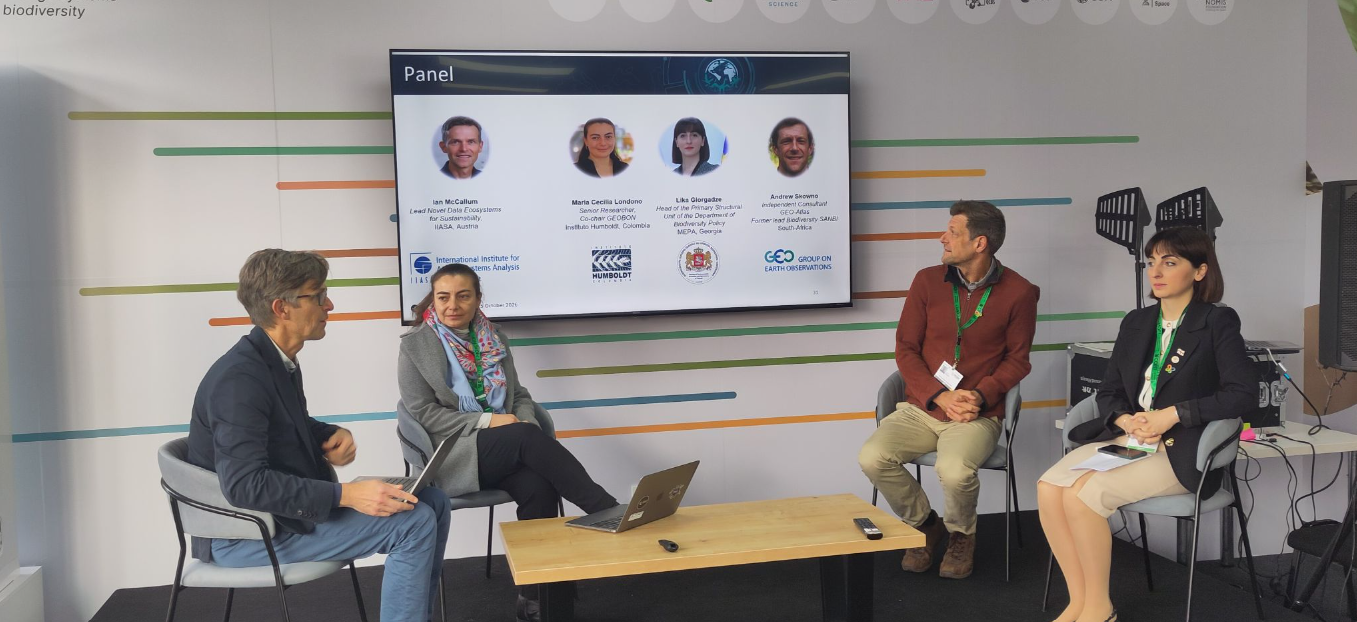
The WEED side event panel discussing global ecosystem mapping at COP17.
Timed to coincide with the COP CBD, we just launched our WEED video here.
